


Dr. Kendra Gaines, Editor-in-Chief, IJHC
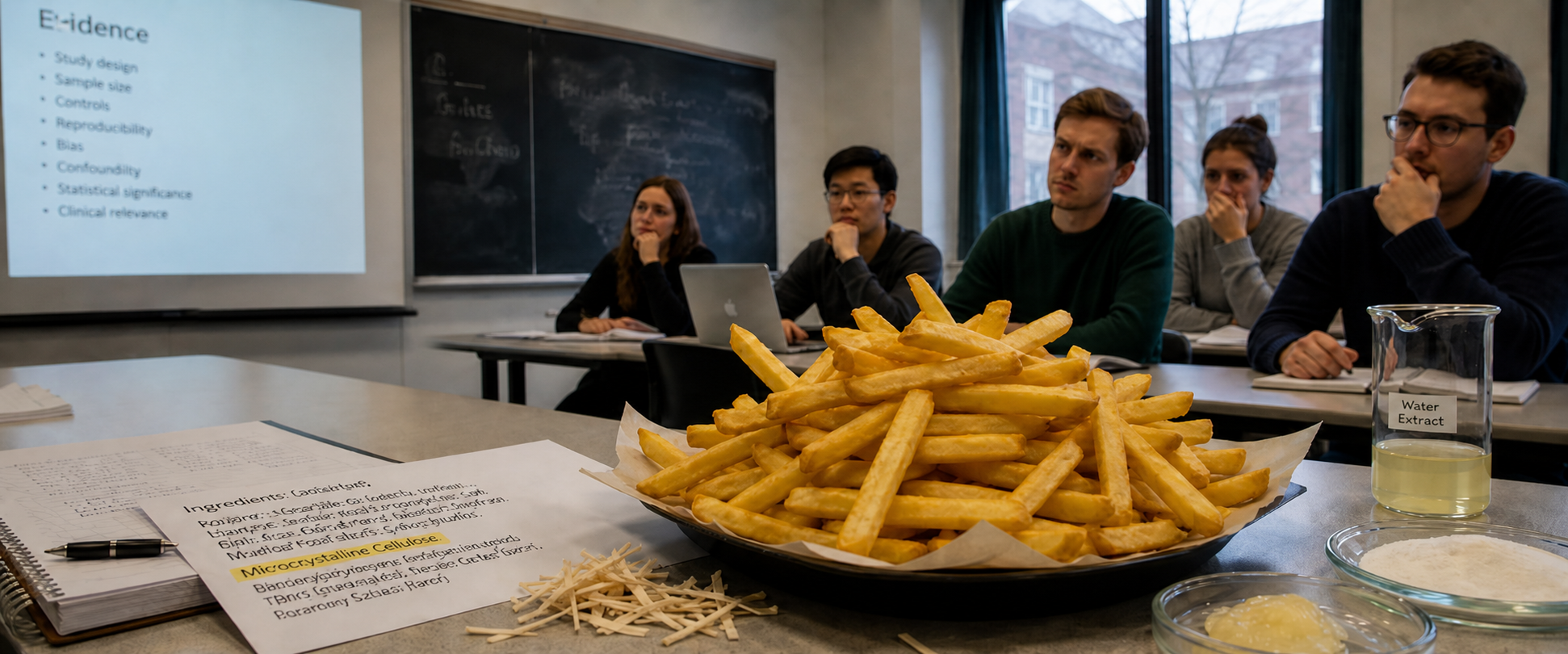
Long ago in my writing workshop for graduate students, I wanted to emphasize just how important solid evidence was for any thesis assertion. Seizing upon a topic that I knew was near and dear to the hearts of most of the students, I announced, “My thesis is that French fries are very bad for your health and you must stop eating them.” I paused as they absorbed this (to them) rather ghastly pronouncement, and then asked, “Are you convinced? Will you now stop eating them?” Heads shook negatively all over the classroom.
Having recently read a substantial article on this very topic, I continued, “Do you actually know what is in those commercial French fries? I bet you thought they were just potatoes and oil and salt, right? Wrong! They are more filler—largely cellulose, actually—than potato. Indeed, there’s some sawdust in them, and the word “potato” comes far down on the formally published list of ingredients. In between all that are numerous chemicals whose names I cannot pronounce. Are you salivating yet?” The classroom-wide look of disbelief and disgust was notable. I International Journal of Healing and Caring 2026, 26(1) 1- 3 concluded with, “Look it up. Think about it. If you still want to eat those things, go ahead. But at least you’ll have a clearer idea of just what you’re putting into your own body.”